
The Complete Guide to Shotgun Ammo Types, Gauges, and Choosing the Right Shell
Shotgun ammo is actually a collection of multiple projectiles—often dozens of lead or steel pellets—packed into a single plastic or paper shell, which spreads out like a deadly cloud after leaving the barrel. This spread is what makes it devastatingly effective at close range, letting you 6.5x57mm Mauser Ammo for Sale hit moving targets like birds or clay discs without needing a precise aim. Each shell’s payload and powder charge are matched to a specific gauge and purpose, from light birdshot for small game to heavy slugs for big animals, so you just pick the right one and pump or load it into the chamber. Simply point, shoot, and the mass of pellets transfers energy fast, stopping a target quickly while keeping recoil manageable for most shooters.
Choosing the Right Shell Gauge for Your Shotgun
When you’re picking shotgun ammo, the gauge is the first thing to nail down because your gun’s chamber is built for one specific size only. A 12-gauge is the most versatile choice for everything from upland birds to home defense, but it kicks harder than a 20-gauge, which offers lighter recoil and is a favorite for smaller shooters. If you’re after a .32 Win Special Ammo for Sale dedicated turkey or slug gun, a 12-gauge gives you the most power, while a 410 bore or 28-gauge is better for small game and skeet—just remember the payload is much lighter. Never force a shell into a chamber it doesn’t match, and always check the barrel stamp before loading. Choosing the right shell gauge is less about “best” and more about matching recoil, range, and target to your needs. Stick with the gauge your shotgun was made for—it’s that simple. Match the shell gauge to your firearm’s marked chamber, every time.
12, 20, or .410: How Gauge Affects Recoil and Payload
The 12 gauge delivers the heaviest payloads, typically 1 to 1⅛ ounces of shot, which translates directly into significant felt recoil, especially in lightweight field guns. A 20 gauge reduces payload to about ¾ or 1 ounce, cutting recoil by roughly 30 to 40 percent while still offering sufficient density for pheasants or clay targets. The .410, throwing only ½ to ¾ ounce, produces the mildest kick, yet its payload limitations demand precise shot placement. Choosing between them is a trade-off: gauge affects recoil and payload inversely, so select the smallest gauge that still patterns enough pellets for your intended range and target size.
Matching Shell Length to Your Chamber for Safe Firing
Always verify that your shotshell’s hull length, printed on the base, does not exceed your 6.8 SPC Ammo for Sale firearm’s chamber length, which is stamped on the barrel. Firing a 3-inch shell in a 2¾-inch chamber creates dangerously high pressure, while shorter shells in longer chambers are generally safe but may reduce accuracy. Matching shell length to your chamber for safe firing is non-negotiable, as the crimp must fully open into the forcing cone. Even a 3½-inch magnum chamber can safely fire 2¾-inch loads, but never the reverse.
- Measure chamber with a drop-in gauge; never rely on visual guesswork.
- Check every shell box for length marking (2¾, 3, or 3½ inches).
- Reserve short shells for practice and long shells for hunting; label your storage bins.
Buckshot vs. Birdshot vs. Slugs: Matching Payload to Purpose
Buckshot, birdshot, and slugs each serve a distinct role in shotgun ammo, and matching payload to purpose hinges on target size and range. Birdshot uses small, numerous pellets, making it ideal for fast-moving, thin-skinned game like birds and clay targets, but it lacks penetration for larger threats. Buckshot carries larger pellets (typically .24 to .33 caliber) that deliver multiple wound channels, suiting it for medium game like deer at close to moderate ranges, where its pattern spreads for a higher hit probability. Slugs are single, heavy projectiles offering maximum energy and deep penetration at longer distances, making them the choice for large game or precision shooting, albeit with significant recoil.
Choose birdshot for small game, buckshot for close-quarters defense or medium game, and slugs for large game or extended ranges.
Always test your chosen load in your specific shotgun to confirm patterning and point of impact before relying on it in the field.
When to Use Birdshot for Small Game and Clay Targets
Birdshot for small game and clay targets shines when your priority is immediate, dense pattern coverage over deep penetration. For upland birds like quail, pheasant, or woodcock, and for rabbits, birdshot’s multiple small pellets create a lethal, tight pattern at typical 20–40 yard shots, dropping game cleanly without shredding edible meat. On the clay circuit, birdshot’s light recoil and fast shot string let you track crossing targets smoothly, breaking brittle clays with authority while keeping your follow-up shots quick. Choose fine shot (No. 7½–9) for delicate clays and close flushed birds; switch to heavier No. 4–6 for tougher pheasants or longer crossing shots. Avoid birdshot beyond 40 yards—pattern spread grows erratic, and energy fades, wounding rather than killing.
Why Buckshot Delivers Stopping Power at Close Range
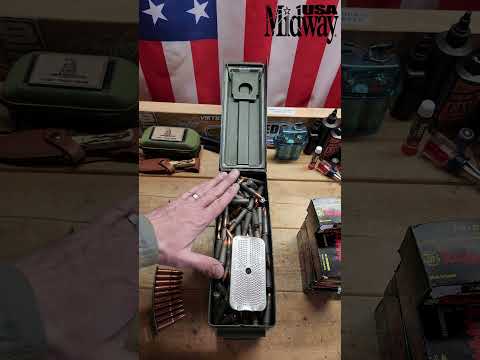
Buckshot’s stopping power at close range hinges on sheer simultaneous mass transfer—multiple large pellets strike as one overwhelming wave, depositing energy across a wide wound channel before they can spread meaningfully. Unlike birdshot’s shallow pepper-spray effect, each 00 or 000 pellet penetrates deep vitals independently, creating overlapping trauma that disrupts central nervous system and circulatory function instantly. This stacked penetration matters because a single pellet might miss a critical structure, but a cluster statistically cannot. Within 15 .338 Lapua Ammo for Sale yards, the pattern stays tight enough to concentrate that force, while velocity remains high enough to guarantee expansion or tumbling. For defensive scenarios, that combination—multiple deep wounds delivered simultaneously—is exactly why close-range buckshot stopping power remains unmatched by lighter loads or slower projectiles.
Slug Ballistics for Accuracy at Longer Distances
For slug ballistics for accuracy Ammunition for Sale at longer distances, you’re trading shotgun spread for a single projectile, and that changes everything past 50 yards. Rifled slugs fired through a smoothbore barrel will drop hard and drift with wind, so you’ll need to compensate for a rainbow-like arc—zero at 75 yards, then expect six to eight inches of drop at 100. A sabot slug from a rifled barrel is the real distance performer, keeping a flatter trajectory and grouping inside two inches at 100 yards. Know your slug’s muzzle velocity and practice the holdover, because at 150 yards, even a good sabot drops a foot. That’s why you match the slug type to your barrel’s rifling, not just the game.
Breaking Down Shot Sizes, Velocities, and Pellet Counts
Shot size, velocity, and pellet count form the ballistic triangle of shotgun ammo—change one and you alter the other two. Smaller shot like #8 or #9 delivers a dense pattern of hundreds of pellets, ideal for close, fast targets, while larger #4 or #00 buck sacrifices count for massive individual projectiles at longer range. Velocity, typically 1,200 to 1,400 fps, matters less for killing power and more for flattening trajectory and reducing lead time, but pushing too fast can deform soft lead pellets, shredding your pattern. Pellet count is fixed by shot weight and size—a 1-ounce load of #8 yields roughly 410 pellets, versus only 9 for 00 buck.
Always match the shot size to your intended distance: high pellet count dominates inside 25 yards, while big, slow pellets retain energy and pattern integrity beyond 40.
Balance these three elements for a load that hits hard where you need it, not one that merely looks impressive on the box.
How Shot Number (e.g., #8, #4, #00) Impacts Pattern Density
Shot number directly dictates pellet size, which in turn defines pattern density at a given range. Smaller numbers like #8 or #9 yield hundreds of tiny pellets, producing a dense, uniform cloud ideal for short-range clay targets or upland birds, where a tight cluster ensures multiple impacts. Conversely, larger shot like #4 or #00 dramatically reduces pellet count—a 12-gauge load of #00 buck holds roughly nine pellets versus over 400 in #8 birdshot. This sparse distribution creates wide gaps between pellets, demanding precise shot placement on game. Therefore, your shot number must match the target: heavy #4 or #00 offers deep penetration but sacrifices density, while fine #8 guarantees a thick pattern that quickly falls apart beyond 30 yards.
Smaller shot numbers (e.g., #8) maximize pattern density with many pellets; larger shot 6.5x57R Ammo for Sale numbers (e.g., #00) minimize pellet count, creating loose patterns that require precise aiming.
High-Brass vs. Low-Brass Loads: What the Velocity Difference Means
The distinction between high-brass and low-brass loads is less about the casing’s length and more about the velocity difference due to powder charge. High-brass shells typically contain more propellant, producing faster shot speeds—often 1,300 to 1,400 feet per second—which tightens the effective range and delivers harder impacts on heavier game. Low-brass loads, with less powder, run slower (around 1,100–1,200 fps), yielding milder recoil and softer patterns, ideal for close-cover birds, skeet, or introducing new shooters. *The practical trade-off is that velocity costs recoil and pattern density shifts at longer distances.* For self-defense or large upland birds, choose high-brass for penetration; for clay targets or small game under 30 yards, low-brass gives better control.
- High-brass loads flatten trajectory, reducing holdover at 40+ yards.
- Low-brass loads reduce felt recoil, aiding rapid follow-up shots.
- Slower low-brass pellets deform less, preserving pattern uniformity.
- Velocity differences matter most with lead shot, less so with steel or bismuth.
Lead, Steel, or Copper: Understanding Shot Material Trade-offs
You feel the cold morning air as you load your shotgun, and the shells in your hand tell a story of trade-offs. Lead shot has always been the storyteller’s favorite—its density drops pheasants cleanly at 40 yards, but it splashes apart on hard-packed .32 ACP Ammo for Sale earth, leaving you frustrated when a clay target shatters too early. Switch to steel shot, and you hear the snap of speed; it flies faster but loses energy quickly, so you must choke tighter and pick your shots inside 35 yards. Then there’s copper-plated shot, the quiet compromise—it resists deformation in tight chokes, giving you pattern integrity without the toxicity worries. In the duck blind, steel keeps your gun swinging; in the upland field, lead rewards your patience. Copper feels like the writer’s rewrite: smoother, denser than steel, yet lighter than lead. Your choice isn’t about “better”—it’s about the story each payload writes on the wing.
Penetration and Deformation of Lead Pellets in the Field
In the field, lead pellet penetration on game hinges on a trade-off between retained energy and rapid deformation. Upon impact, soft lead mushrooms aggressively, transferring energy quickly to vital tissue—ideal for close- to mid-range shots on birds or small game, where over-penetration risks a wasted carcass. However, this same malleability means pellets flatten against heavy bone or dense muscle, stalling deeper penetration past 40 yards. Conversely, a harder shot or tighter choke can improve deep tissue disruption, but you sacrifice the devastating, wide wound channel that deformed lead creates. For ethical kills, choose lead when you need immediate, shallow stopping power rather than long-range punch.

Lead pellets deform fast and penetrate shallowly, trading pass-through power for massive, immediate tissue damage at practical shotgun ranges.
Non-Toxic Steel and Tungsten Options for Modern Shooters
For modern shooters, non-toxic steel and tungsten loads deliver distinct advantages beyond mere compliance. Steel’s lighter weight demands tighter chokes and faster shotshell velocities to maintain effective downrange energy, making it ideal for open-water pass-shooting where pattern density matters more than raw punch. Tungsten, by contrast, offers a denser, harder pellet that retains energy like lead but without fragmentation, letting you drop heavy geese or turkeys at extended ranges with ethical certainty. Choose steel for affordability and high-volume practice; reserve tungsten for premium hunting scenarios where penetration and terminal effect on tough game are non-negotiable. Both require checking your barrel’s rated pressure, but they eliminate the poisoning risk to wetlands and scavengers entirely.
Q: What’s the real difference between steel and tungsten for a dove hunter?
A: Steel patterns tighter and needs faster loads to compensate for its lower mass, while tungsten’s superior density lets you shoot standard velocity with denser, harder-hitting payloads—ideal for clean kills at 40-plus yards.
Practical Tips for Buying, Storing, and Handling Shells
When buying shotgun shells, stick to reputable brands and check the crimp for dents or loose shot—flawed crimps cause feeding issues. Store them in a cool, dry place, ideally in a sealed ammo can with silica gel packs, because moisture rusts the brass base and swells the paper hulls, leading to chamber stick. Avoid leaving shells in a hot car; temperature swings degrade the powder and wads. Handle them by the hull, not the primer, and never oil the rounds—lubricant seeps in and kills the primer. Keep different shot sizes and loads visually separated in labeled boxes to avoid grabbing steel shot at a clay range where it’s prohibited. Q: How long do shotgun shells last? A: Stored properly, they’re reliable for decades, but if the primers look green or the hulls feel brittle, toss them.
Reading Box Labels: What FPS, Dram Equivalent, and Shot Weight Tell You
When reading box labels, FPS, dram equivalent, and shot weight define performance before you pull the trigger. FPS (feet per second) indicates muzzle velocity; higher numbers mean flatter trajectories and harder hits, but also more recoil. Dram equivalent measures smokeless powder’s pressure relative to black powder—a 3.25 dram load feels brisk, while a 2.75 dram load cycles gently for target work. Shot weight (ounces of pellets) determines pattern density: 1¼ ounces throws more shot for longer strings, but 1 ounce tightens patterns and reduces recoil. *Always match FPS to your target’s distance, since a fast load at 20 yards over-penetrates clay birds, wasting energy.* For home defense, prioritize shot weight over FPS, as heavier payloads deliver more stopping power at close range.
Proper Ammo Storage to Preserve Performance Over Time
To preserve shotgun shell performance, proper ammo storage hinges on environmental consistency, primarily shielding rounds from temperature swings and humidity. Moisture is the chief enemy, as it corrodes brass bases and degrades cardboard hulls, leading to pressure irregularities and duds. Store shells in sealed, military-style ammo cans with desiccant packs, avoiding basements or attics where condensation forms. Keep them off concrete floors—use wooden pallets or shelves to prevent wicking moisture. *Rotate your stock annually, firing older shells first, since propellants and primers chemically age even in ideal conditions.*
- Maintain a stable 60–70°F range to prevent thermal expansion of primers.
- Use silica gel desiccants, replaced every six months, inside airtight containers.
- Store vertically with rims down to distribute pressure evenly on the crimp.
- Never leave shells in direct sunlight or vehicle trunks during seasonal changes.
Common Shotgun Ammo Problems and How to Avoid Them

Common shotgun ammo problems stem from mismatched loads, improper storage, and worn components. Failure to fire often results from weak primer strikes caused by buildup in the bolt or firing pin channel—clean these after every trip. Misfeeds and jams occur when using low-brass target loads in autoloaders designed for heavy magnums; stick to the shell length and pressure rating printed on your barrel. Swelling or stuck hulls indicate excess moisture or oil in the chamber; always wipe the chamber dry before loading. Avoid deformation by never tossing loose shells in a bag—use a partitioned carrier.
Rotate your ammo stock annually to prevent powder degradation and weak patterns.
Finally, check for dents on the rim or crimp before loading; any flaw can cause a dangerous squib load.
Misfires, Hangfires, and Duds: What Causes Them and Safe Responses
A misfire means the primer struck but the shell didn’t go off—usually from a light striker hit, oil-soaked primer, or worn firing pin. A hangfire is a scary delayed ignition, often caused by defective primers or moisture in the powder, and it can fire a second or two later. A dud, meanwhile, is a complete failure, typically from bad storage or old ammo. Always keep the muzzle pointed downrange for at least 30 seconds .35 Remington Ammo for Sale after a click before opening the action, because a hangfire could still ignite. Eject the shell carefully, inspect the primer strike, and dispose of duds safely. If you’re unsure why it failed, don’t reload that shell again—just move on.
Fixing Feeding and Extraction Issues Related to Shell Design
If your scattergun is hiccuping mid-cycle, the culprit is often the shell’s rim and base. A rolled or deformed rim can slip past the extractor, so inspect the case head before loading—toss any with dents. For feeding, watch the crimp: a too-open star crimp catches on the shell stop. Stick to high-brass or quality plastic hulls that hold their shape in the tube; soft target loads can swell. When a round fails to https://specialtysportsandsupplyltd.com/ eject, polish your chamber lightly to remove carbon, but also test a different brand—some rims are machined tighter. Swapping to a shell with a solid, reinforced feeding and extraction-friendly base design solves most snags instantly.
Most feed/eject 6.5×55 Swedish Ammo for Sale failures trace back to shell rims, crimps, or hull integrity—choose sturdy, well-formed ammo and keep the chamber clean to stay cycling.
